

A Look into La Palma's Plant World
Within a few kilometers, species, growth forms, and care needs change as dramatically as on few other European islands.
Back to La Palma overview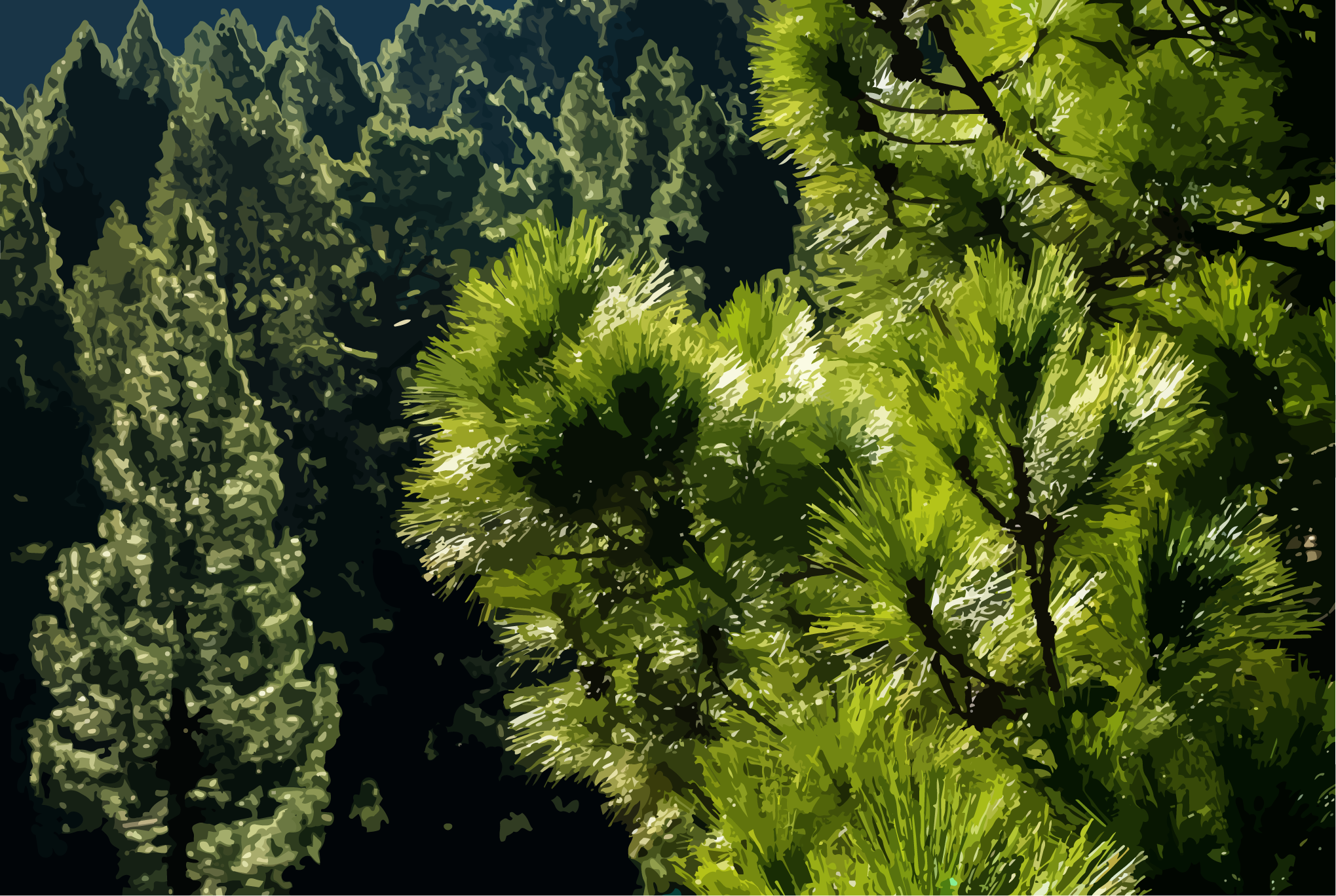
Plant World.
Laurel forest, pine, and subtropical gardens: great diversity in a small space.
The diversity of the island’s vegetation
La Palma is an island where plants do not simply grow, but continually reorganize themselves across gradients of elevation, moisture and volcanic soils. Its vegetation is not a uniform carpet, but a complex mosaic of zones, transitions and adaptations. Every slope, every aspect and every altitude tells its own botanical story.
In the humid northeast, the laurel forest unfolds in its most pristine form. Evergreen canopies, dense undergrowth and permanently humid air create an ecosystem reminiscent of ancient primeval forests. Mosses and lichens cover branches and rocks, while sunlight reaches the forest floor only in filtered form, allowing slow and continuous growth.
Managed landscape
With increasing elevation and changing exposure, the plant world changes noticeably. The Canary pine dominates large parts of the middle elevations and displays an extraordinary capacity to adapt to fire, drought and nutrient-poor soils. It is less a distinct habitat than a vital link between the humid forests and the drier volcanic landscapes.
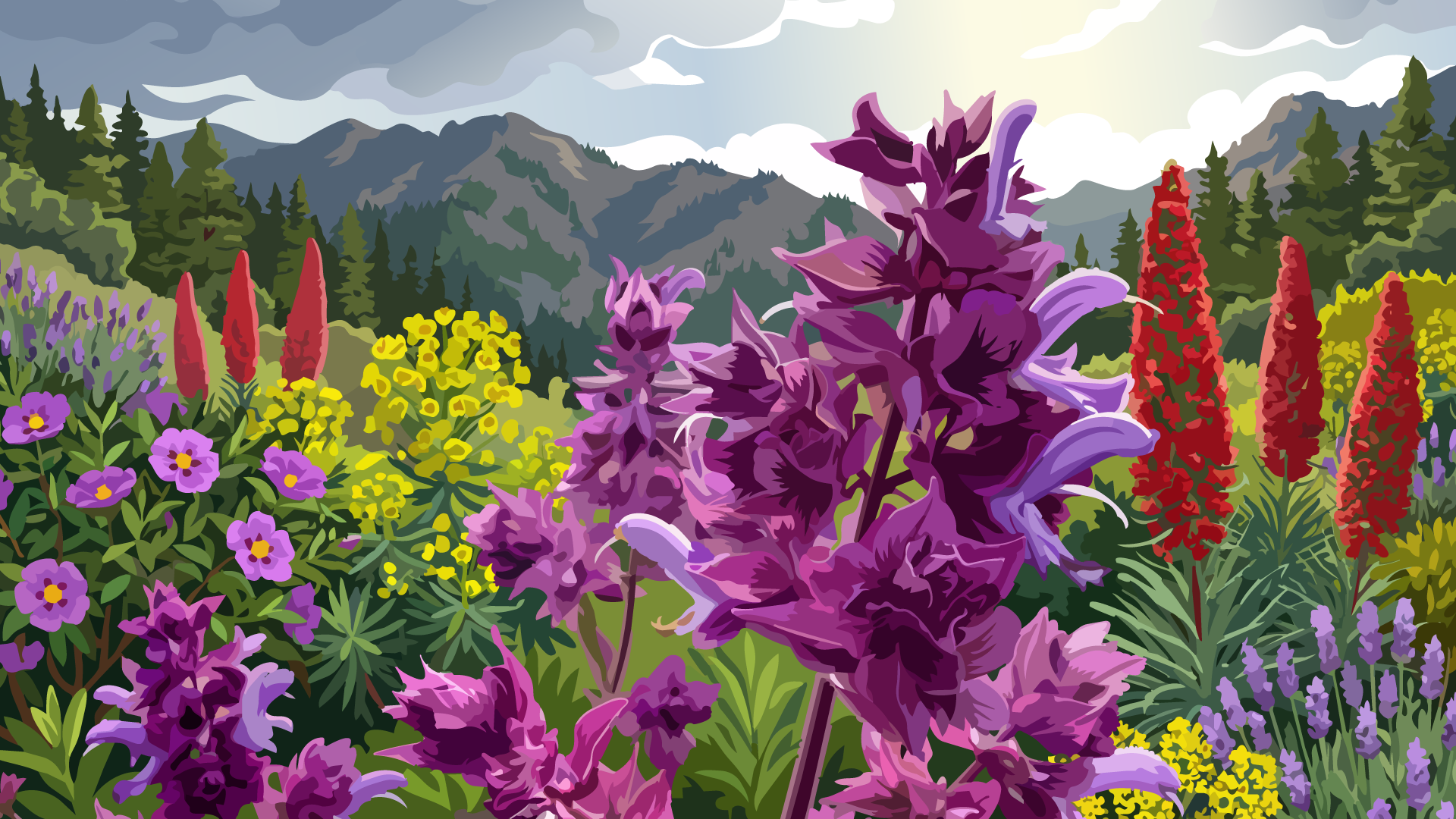
In the drier regions of the west and south, vegetation becomes sparser and more specialized. Here, resilient shrubs, pioneer species and the first colonizers of fresh lava dominate the landscape. Life often begins where conditions appear least favorable—on cooled lava, in fine volcanic ash or within the smallest cracks in the rock.
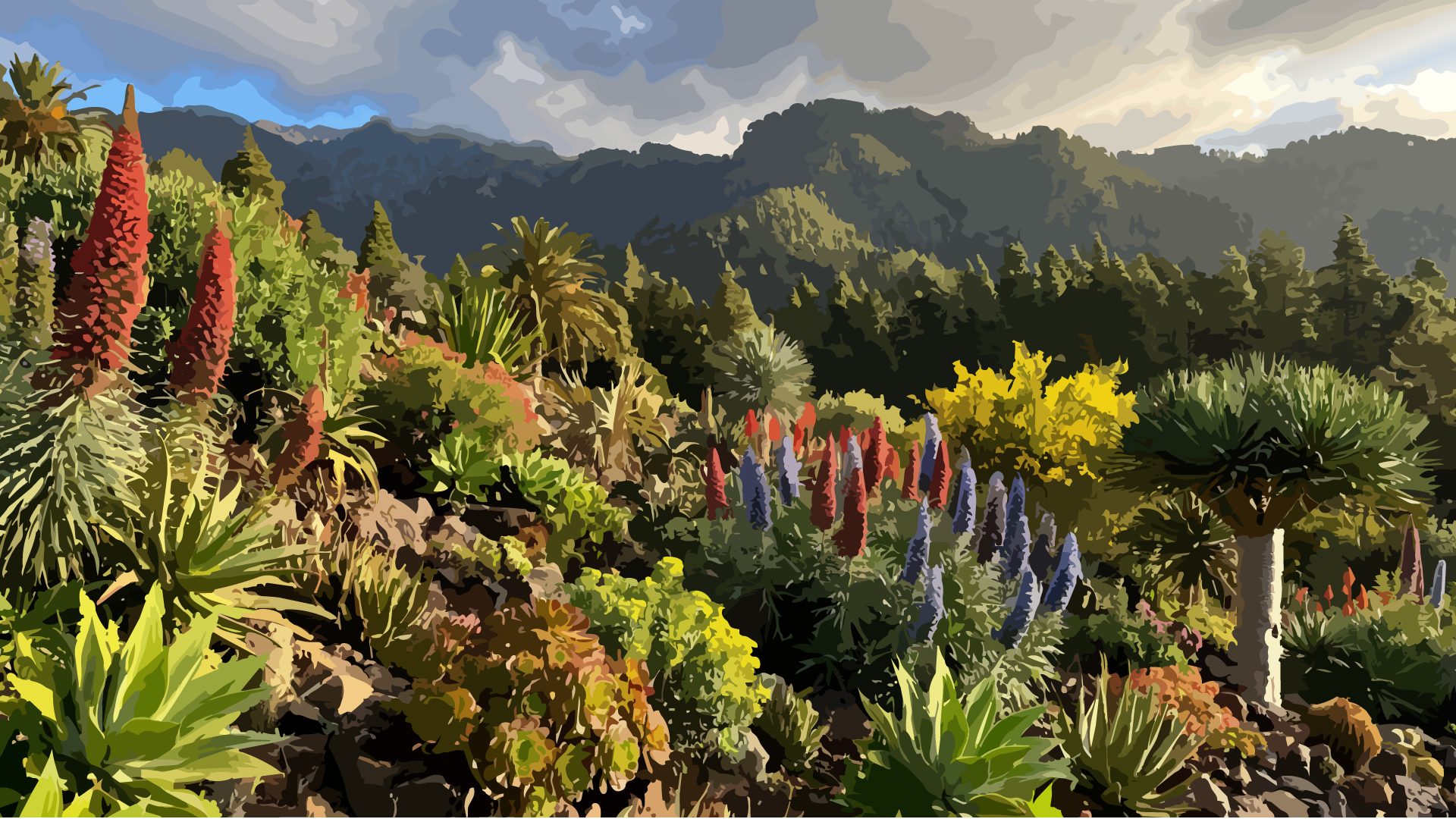
Particularly characteristic is the close relationship between vegetation and microclimate. Moisture from the trade wind clouds, solar radiation and elevation often determine completely different plant communities within just a few metres. This remarkable fine-scale variation turns the island into a mosaic of biological transitions.
The vegetation of La Palma is therefore not a static system, but an expression of continuous adaptation. It responds equally to fire, water and time, transforming the island into a living archive of ecological possibilities—from ancient relict ecosystems to young habitats that are constantly taking shape.