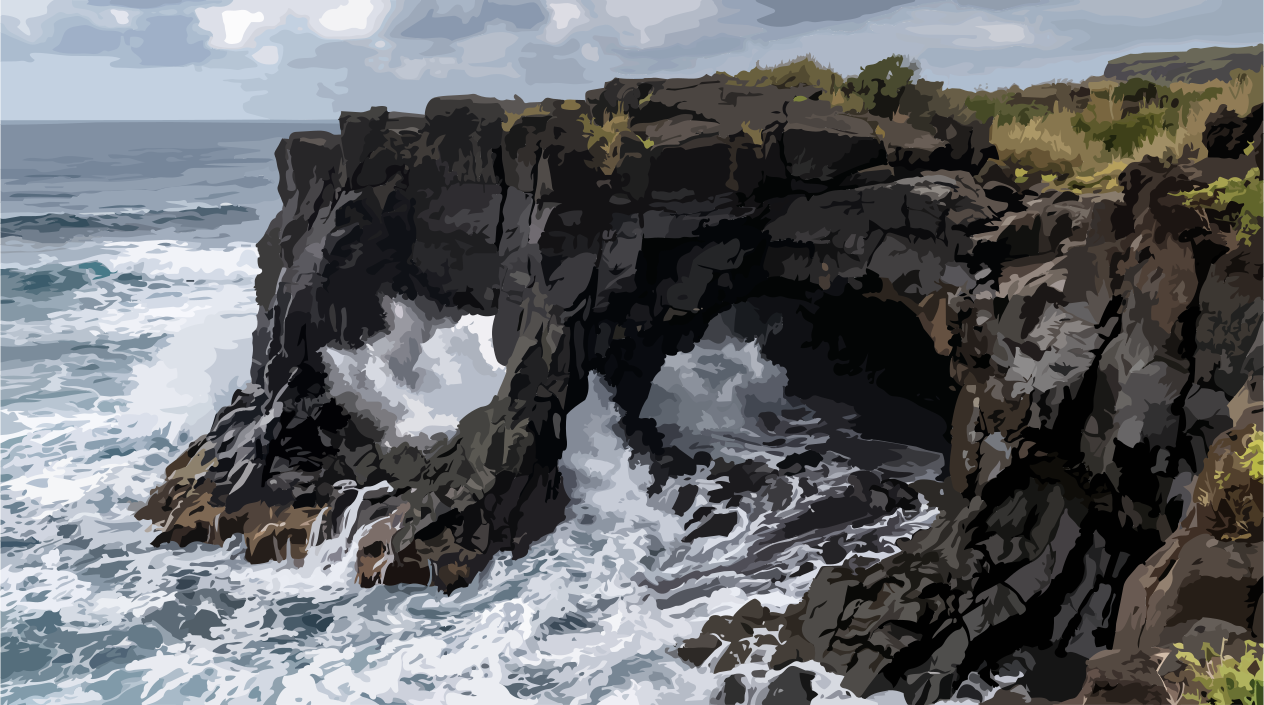
Nature's Forces at Work
La Palma is geologically not a finished chapter, but a landscape in continuous development.
Back to La Palma overview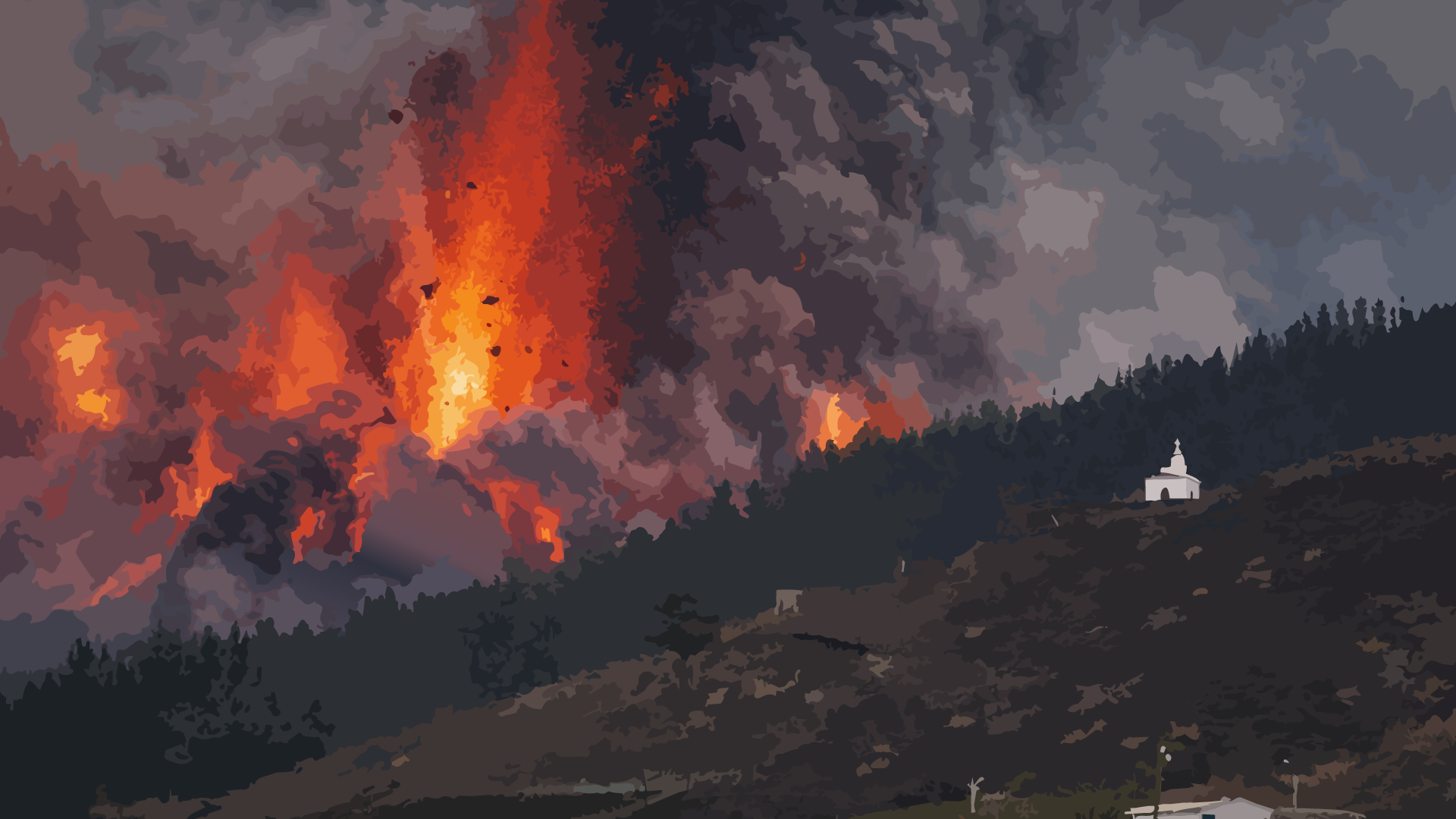
Fire Shapes an Island.
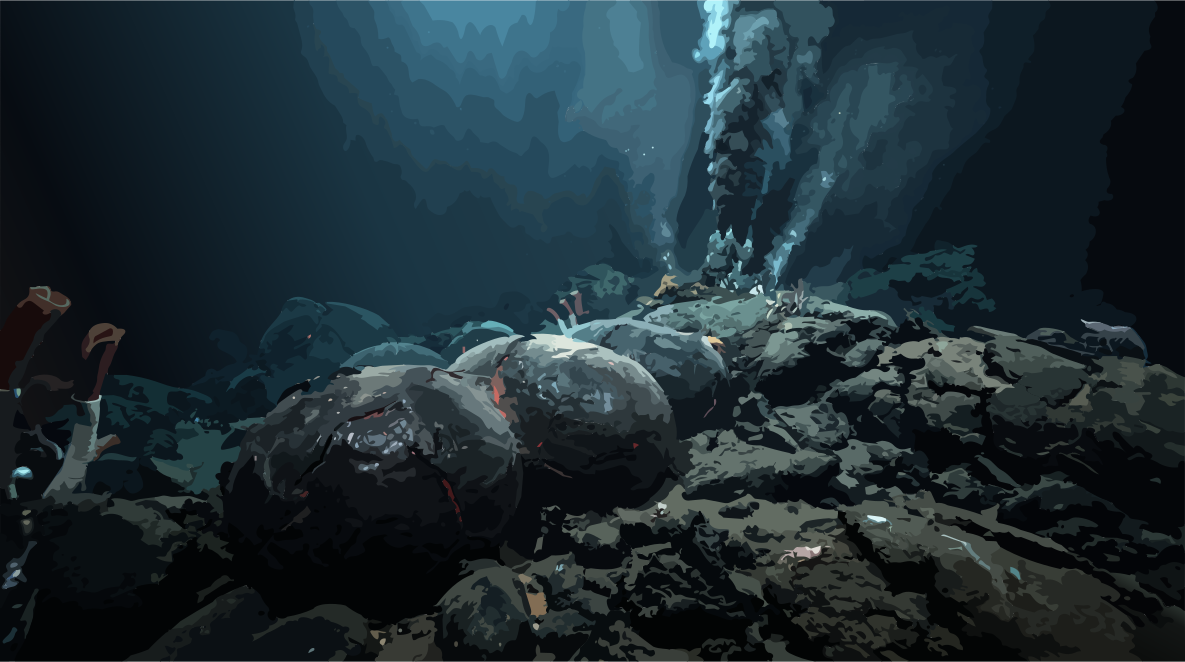
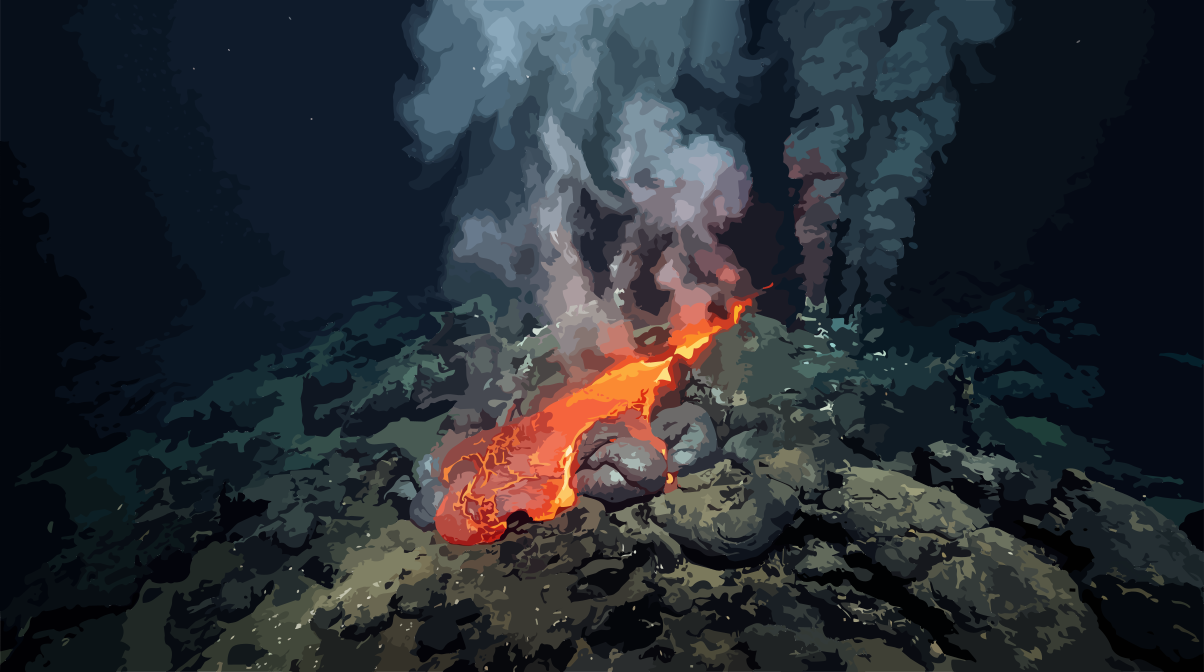
From the first eruptions on the seafloor to the Caldera: a story that’s still not finished.
Forces of nature and geological dynamics
La Palma is an island born from the Earth's interior. Its foundation is not static, but the result of an ongoing process—a dynamic interplay of pressure, heat and time. Beneath its visible surface lies a history measured not in years, but in eruptions and geological cycles.
Everything that shapes the island today ultimately originates from volcanic forces. Layer by layer, material from the Earth's interior was deposited, solidified, fractured and covered again. In this way, a complex body of basalt, ash and lava gradually rose from the Atlantic, forming a new landscape.
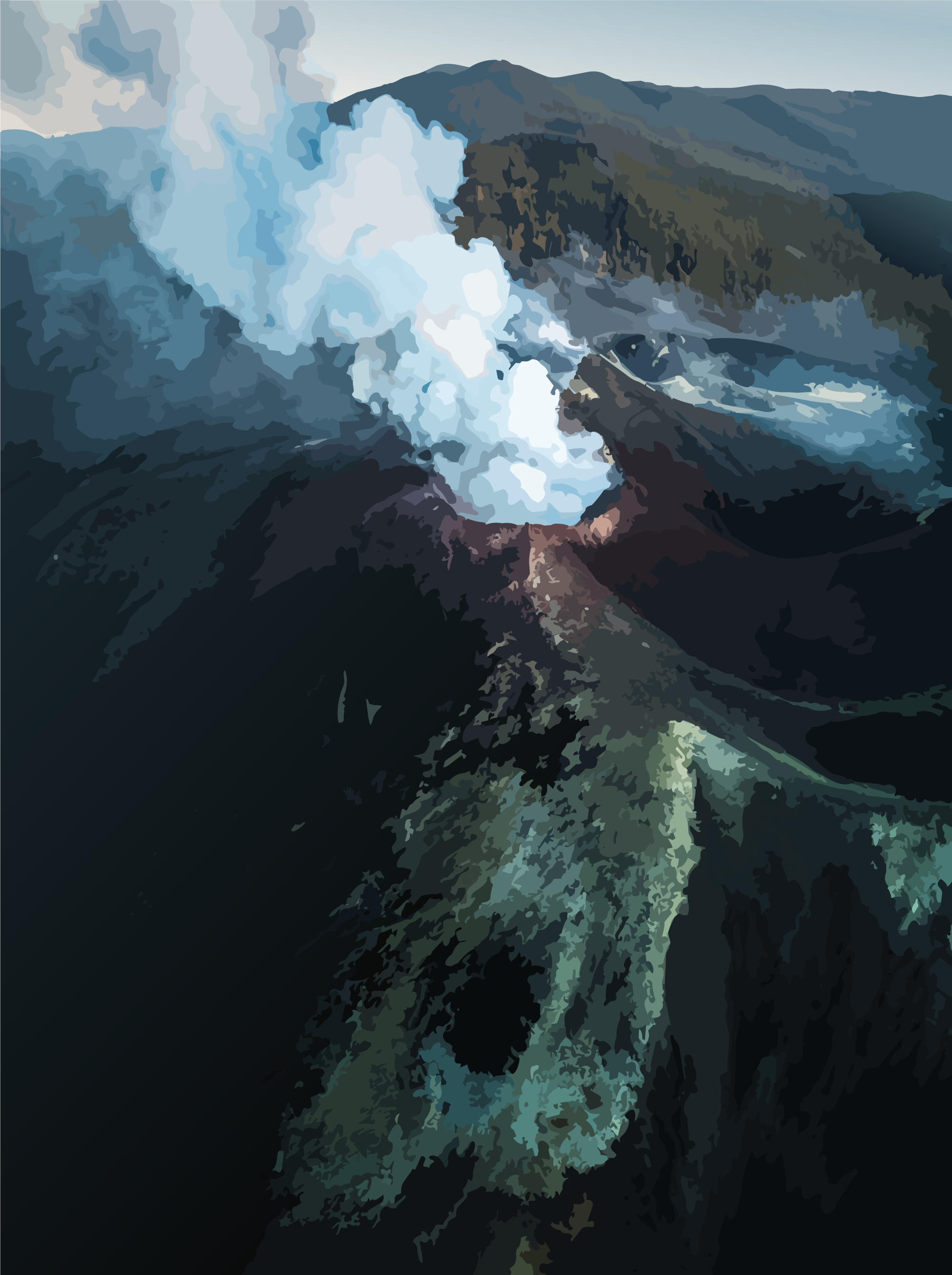
Steam clouds rising above the Tajogaite volcano in the south of La Palma
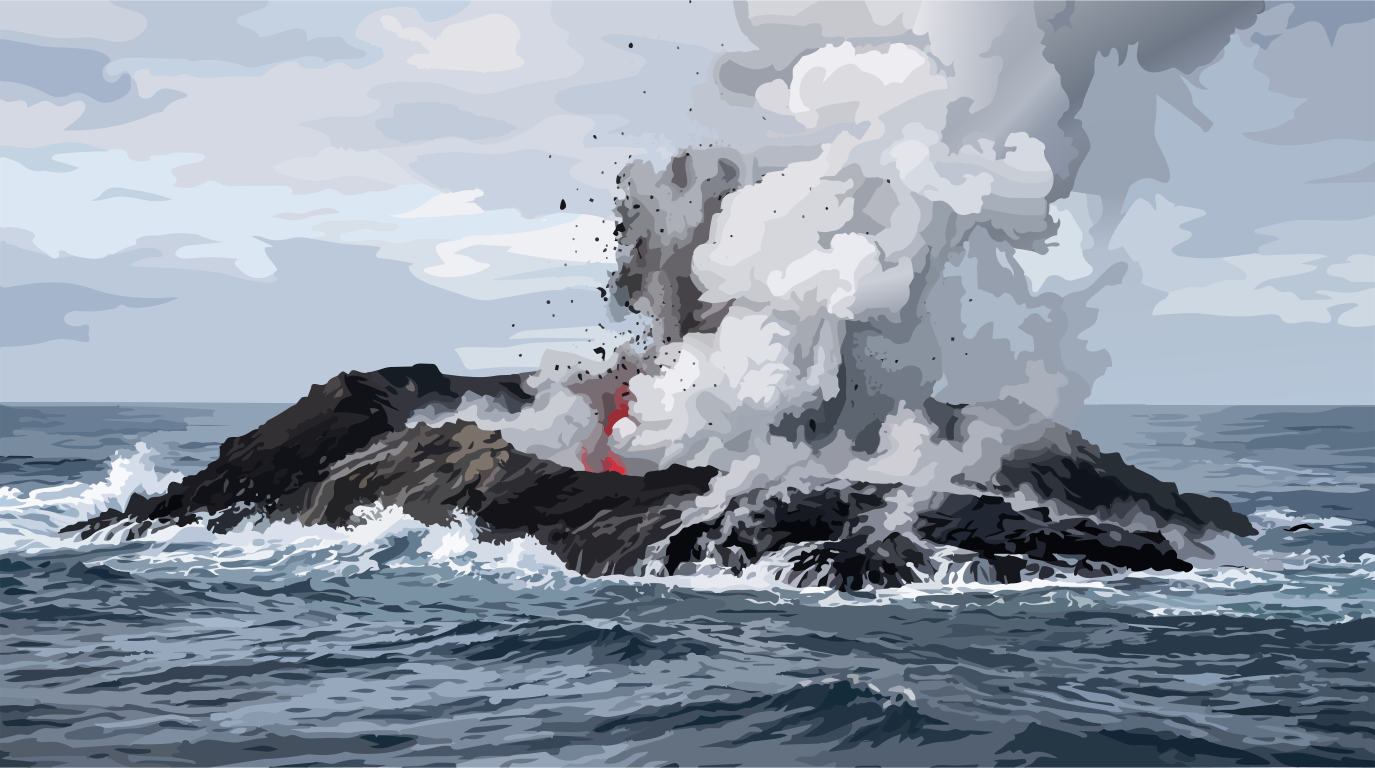
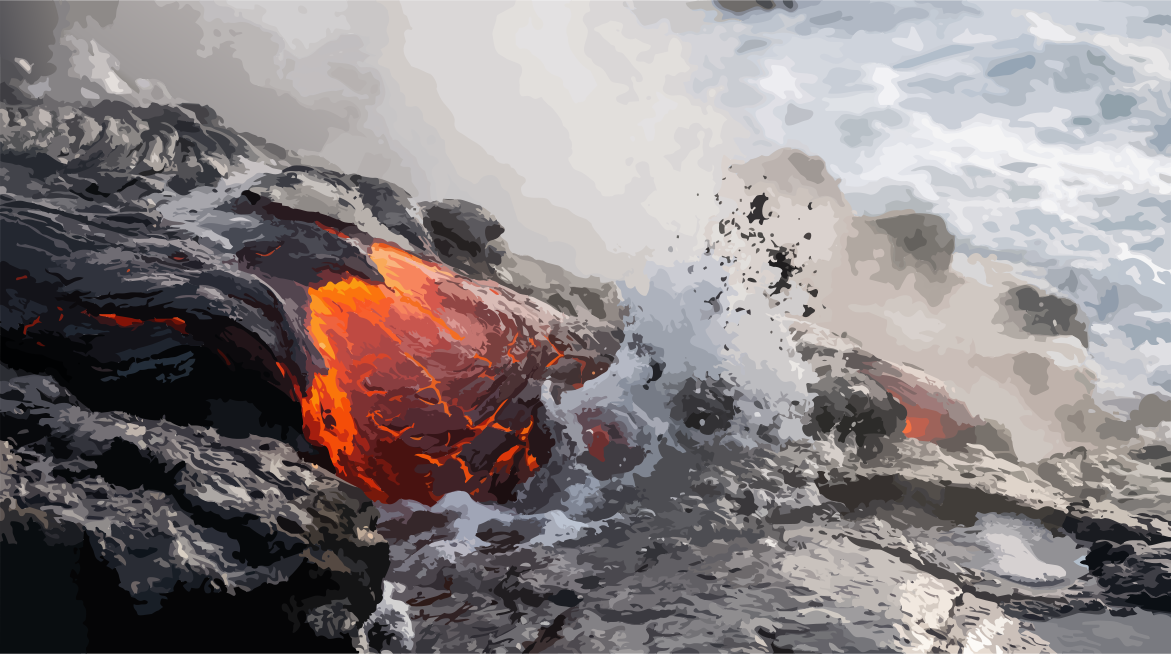
Yet this fire is not only part of the past—it is also the present. The island is geologically young and remains active. Fissures open, magma finds its way to the surface, and new land emerges where there was once only sea or older rock formations. La Palma is therefore not a completed chapter, but an ongoing process.
The landscape visibly carries this dynamism within it. Volcanic cones, cooled lava flows and rugged ridgelines tell the story of moments of sudden transformation, while erosion and vegetation slowly begin to reshape these traces. Destruction and renewal do not exist here as opposites, but as parts of the same continuous cycle.
Between fire and time, a distinctive form of stability emerges—not stillness, but balance through change. The island is never truly finished; it is continually rewritten. Every eruption adds another chapter, seamlessly becoming part of the existing whole.
In this way, La Palma becomes a place where geology remains visible. A place where the Earth's interior is not hidden, but has become landscape—and continues to resonate through every line, every stone and every slope.
Applied relevance
Geology affects soil behavior, slope stability, and runoff patterns.
Geological context improves risk assessment and long-term planning quality.
A better reading of subsurface conditions helps prioritize interventions with stronger technical resilience.
It also informs material choices, infrastructure design, and maintenance cycles suited to each geomorphological setting.
Without that base, territorial planning becomes less resilient under changing conditions.