A compact island where geology, climate, and daily life interact in striking ways.
80+Endemic plant species
2MYears of geological evolution
6,500mAbsolute elevation
2021Latest volcanic activity
4Seasons in one day
Discover La Palma
La Palma is an island of time and depth, born from fire and shaped by wind. Beneath its green slopes lies a volcanic memory older than any human narrative, yet still young enough to keep unfolding. Here, land and sky seem to stay in conversation.
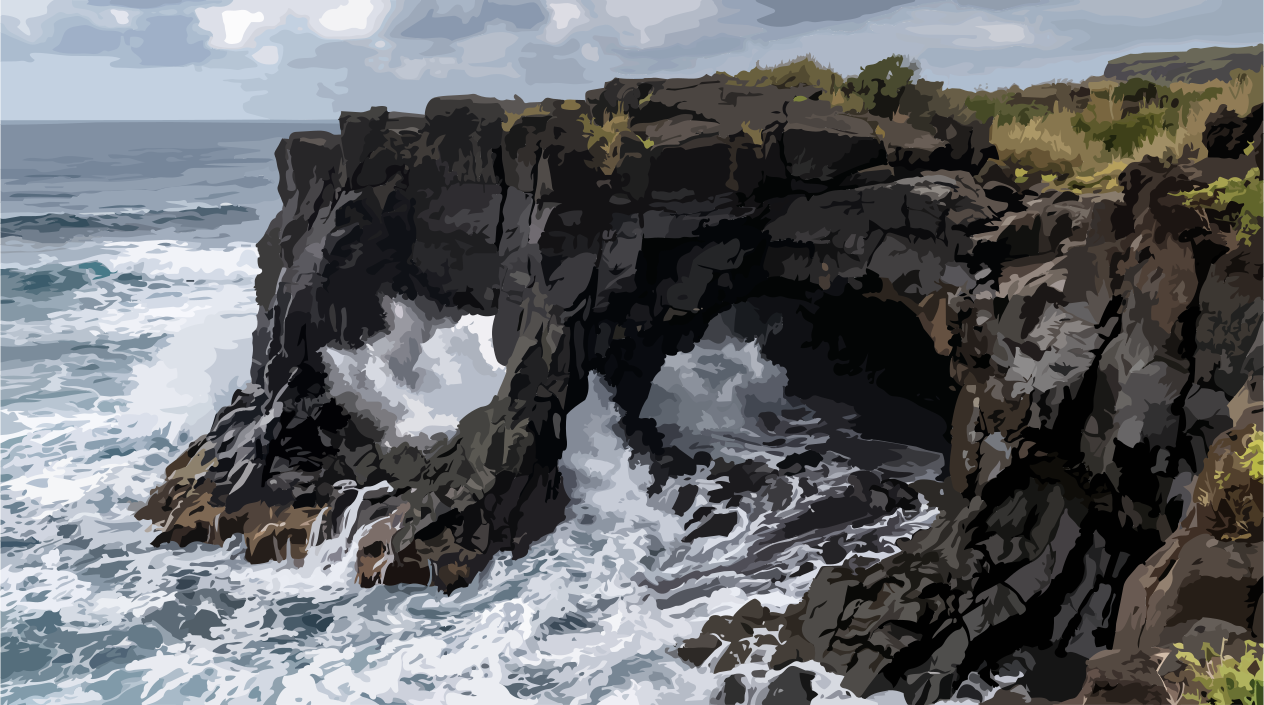
Rising from the Atlantic, it feels like a vast structure of stone: summits above the clouds and a foundation anchored thousands of meters below sea level. Every trail, ravine, and cooled lava flow points to a living geology that keeps transforming, breaking, and creating anew.
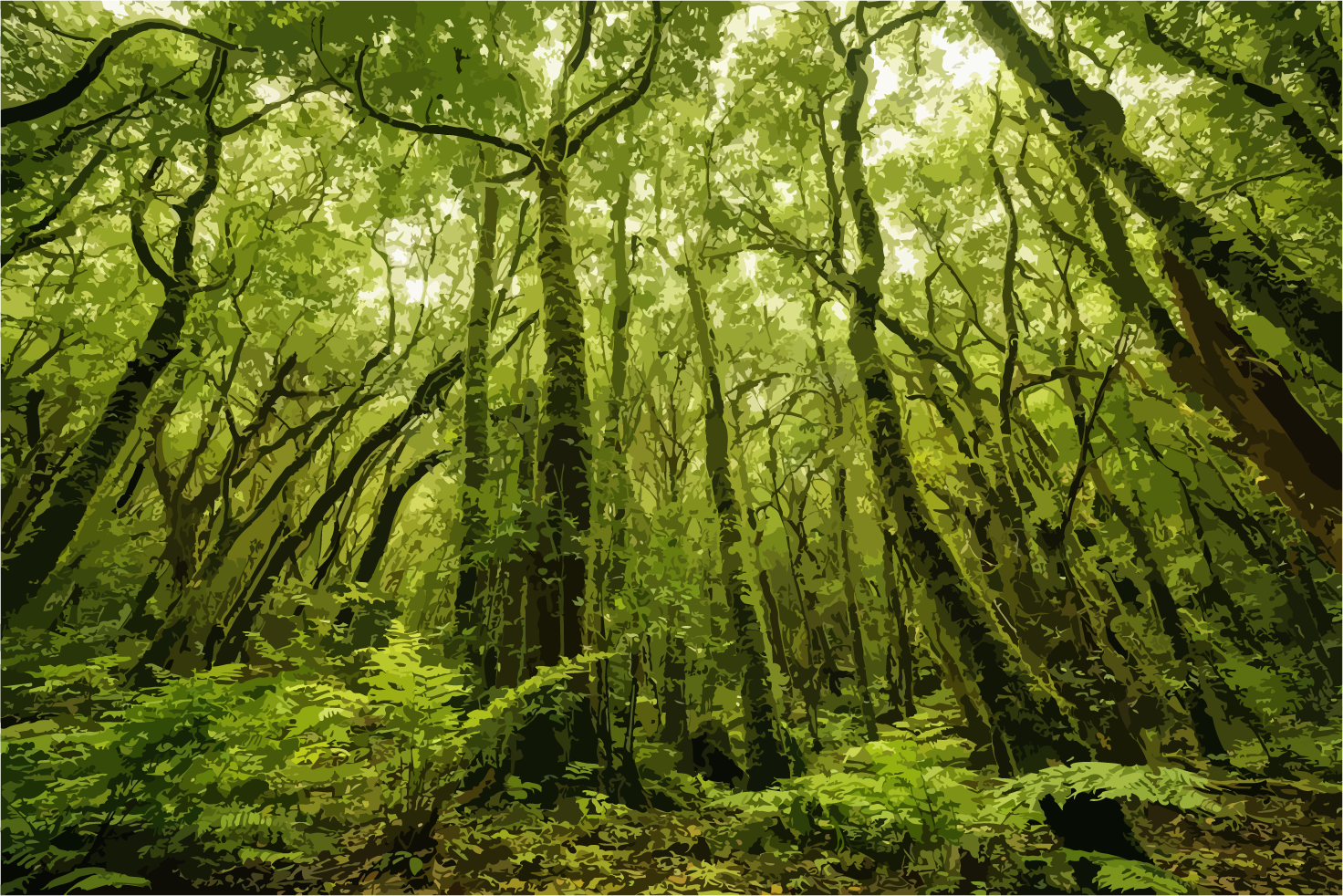
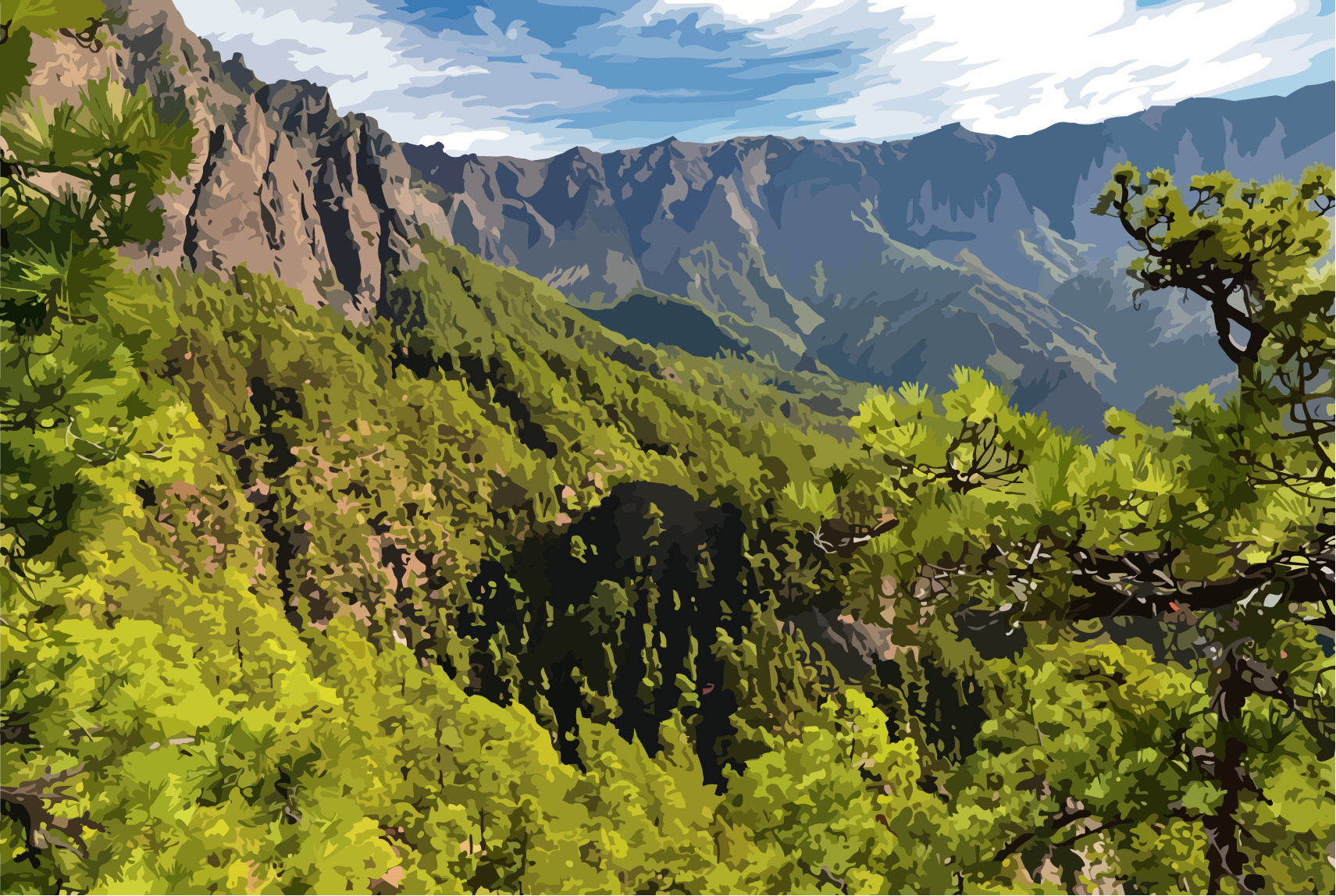
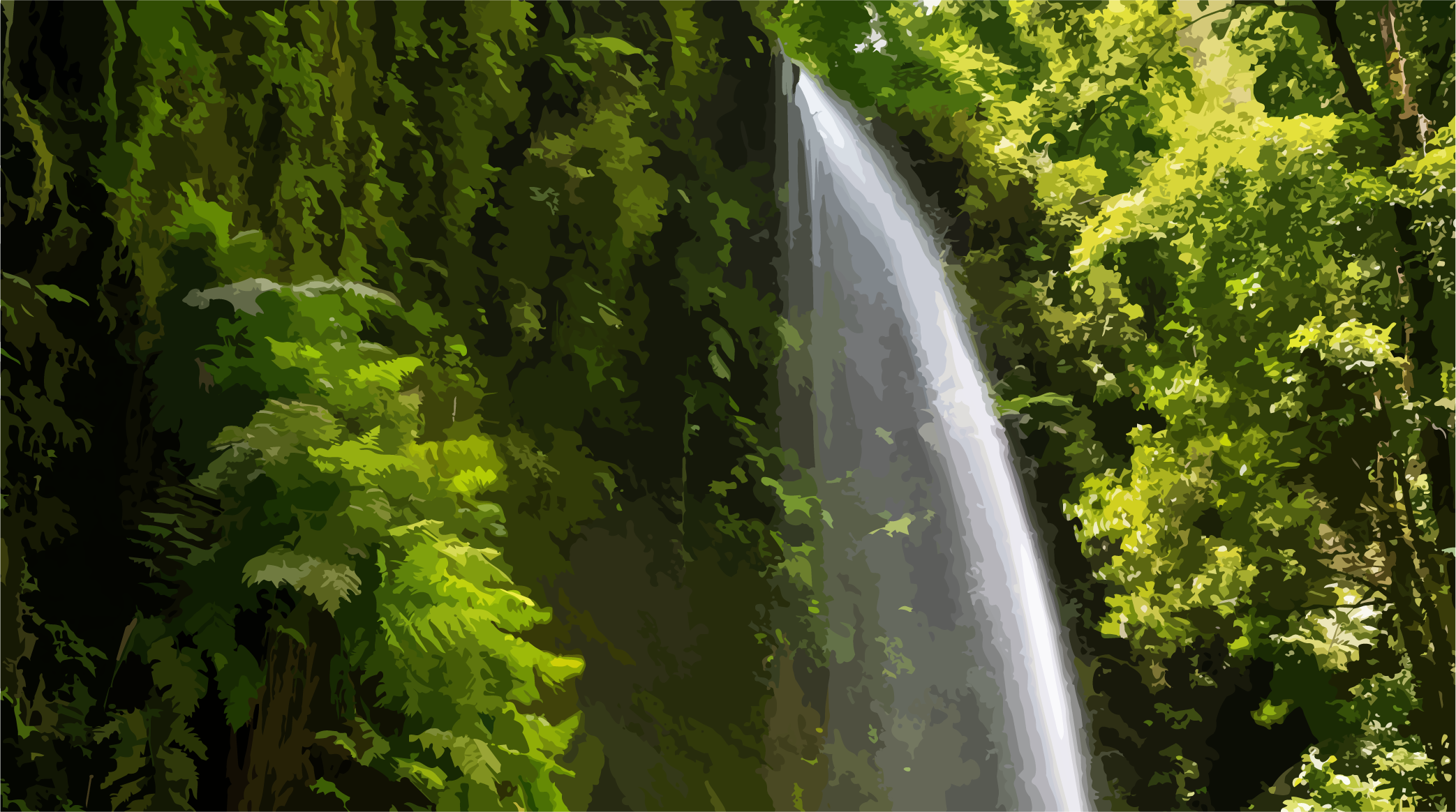
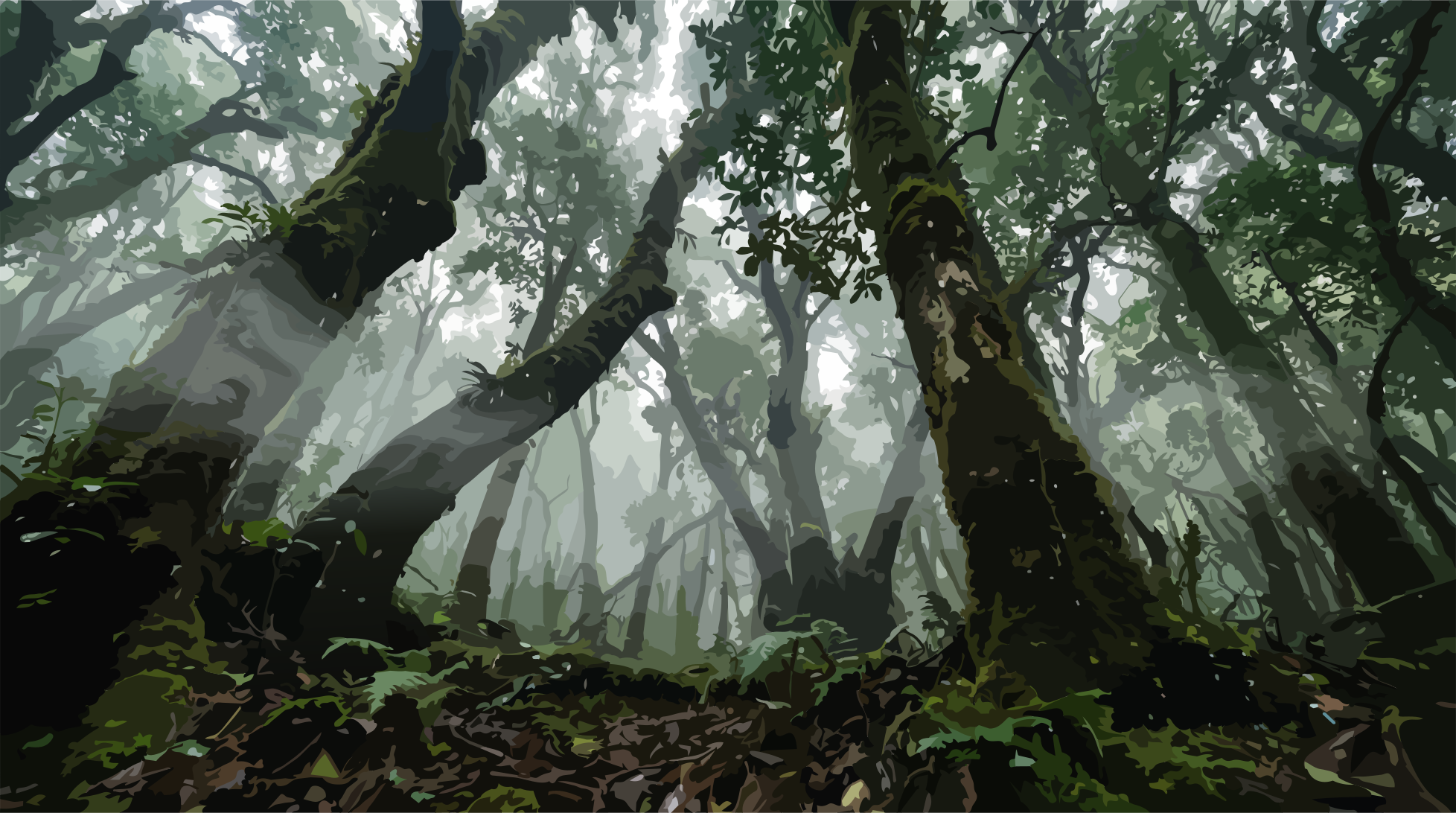
Between dark basalt and fertile volcanic soils, a remarkable biodiversity has taken hold. In higher zones, Canary pines endure and regenerate even after fire. Lower down, laurel forests preserve traces of older ecological eras once widespread across Europe.
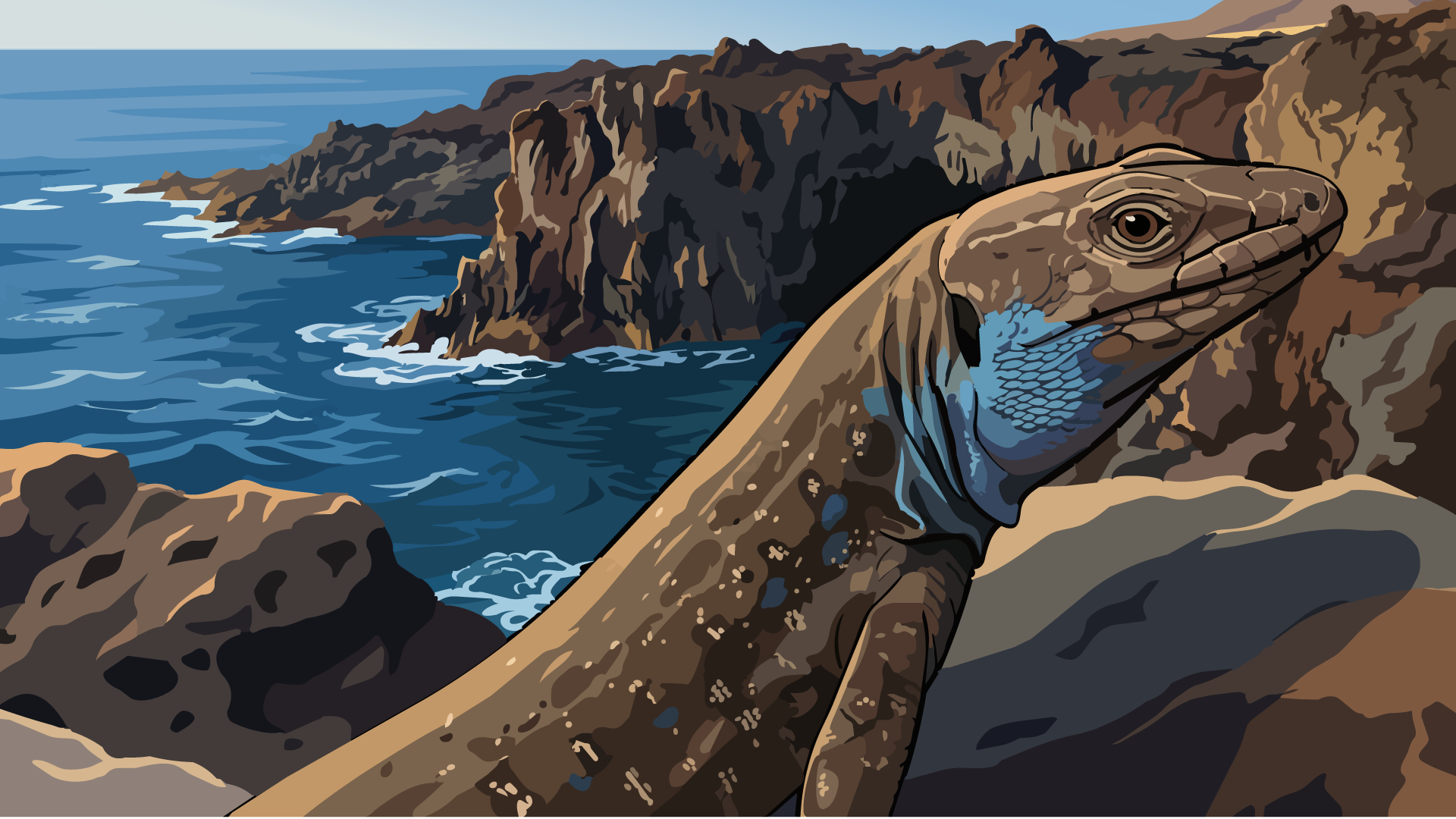
La Palma's fauna is quiet but distinctive. It is shaped by small habitats defined by wind, altitude, and volcanic terrain. Some species are found only here or elsewhere in the Canary Islands, and absences are telling too: no native snakes, few large mammals, and a landscape where birds, insects, and endemic microfauna dominate.
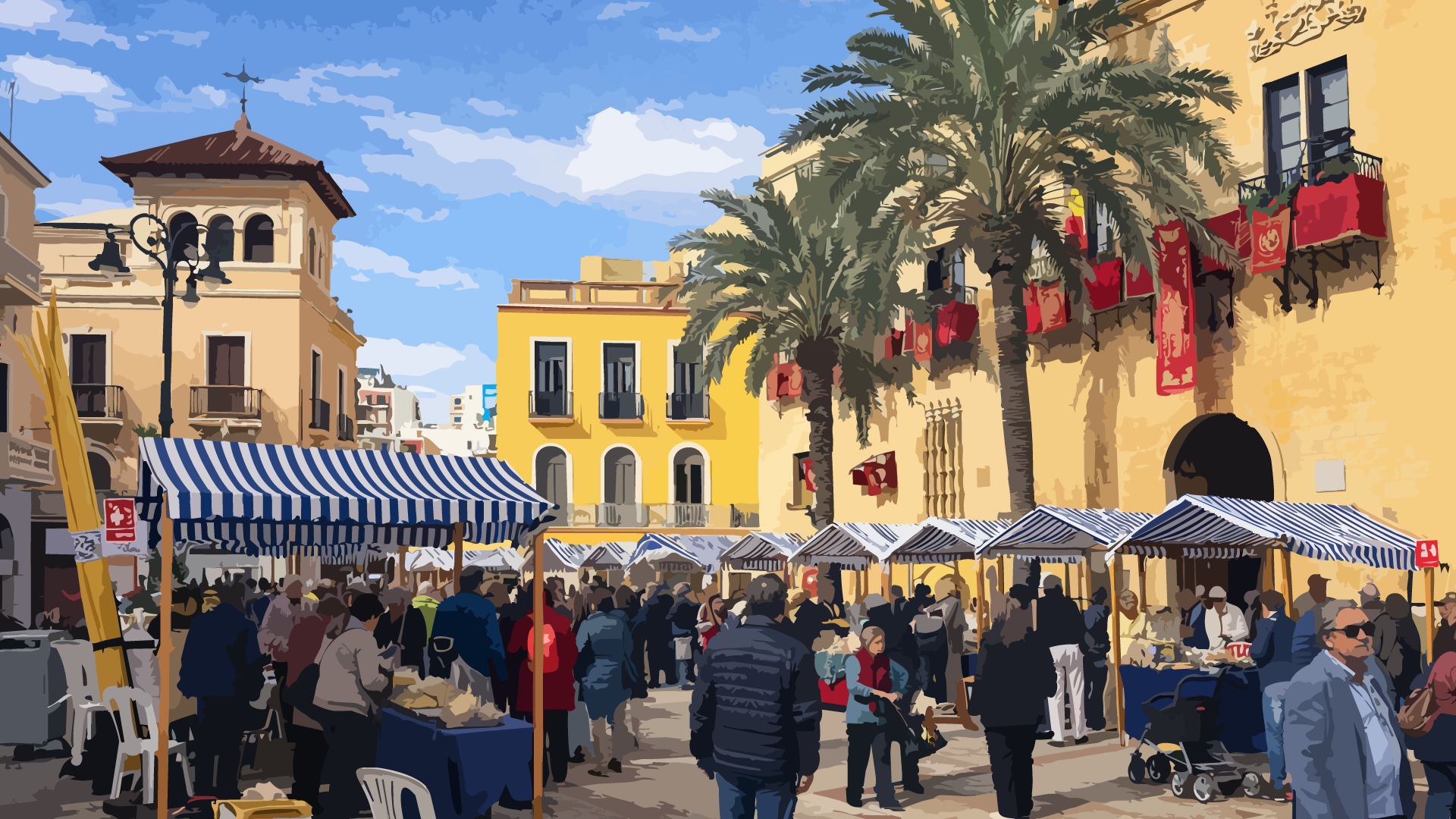
The island's history is a story of balance between people and nature, between arrival and adaptation. Settlements grew on fertile ash, routes were carved across old lava fields, and local life learned to coexist with volcanic uncertainty. La Palma is not static scenery, but a breathing territory.
Those who stay long enough often sense that this island is more than geography. It is a rhythm of emergence and change, of mist and light, of rock and ocean. A place where nature is not a backdrop, but a patient and powerful narrator.
Topic selection
La Palma reveals its stories layer by layer: in its geology, in its habitats, in the traces of its history, and in details that appear only when you look closely. If you want to go deeper, you will find different paths here to explore the island from multiple perspectives and understand its character step by step.
An Island of Heights and Coasts.
"In all things of nature there is something of the marvelous."
Aristotle
La Palma is, in the most literal sense, an island that rose from the Earth's interior. Its foundation consists of successive layers of solidified lava, volcanic ash, and collapsed crater structures—a geological archive that preserves the evolution of an oceanic shield volcano over millions of years. Every meter of the island tells a story of eruptions, collapses, and renewal, recorded layer upon layer through time.
"The clearest way into the Universe is through a forest wilderness."
John Muir
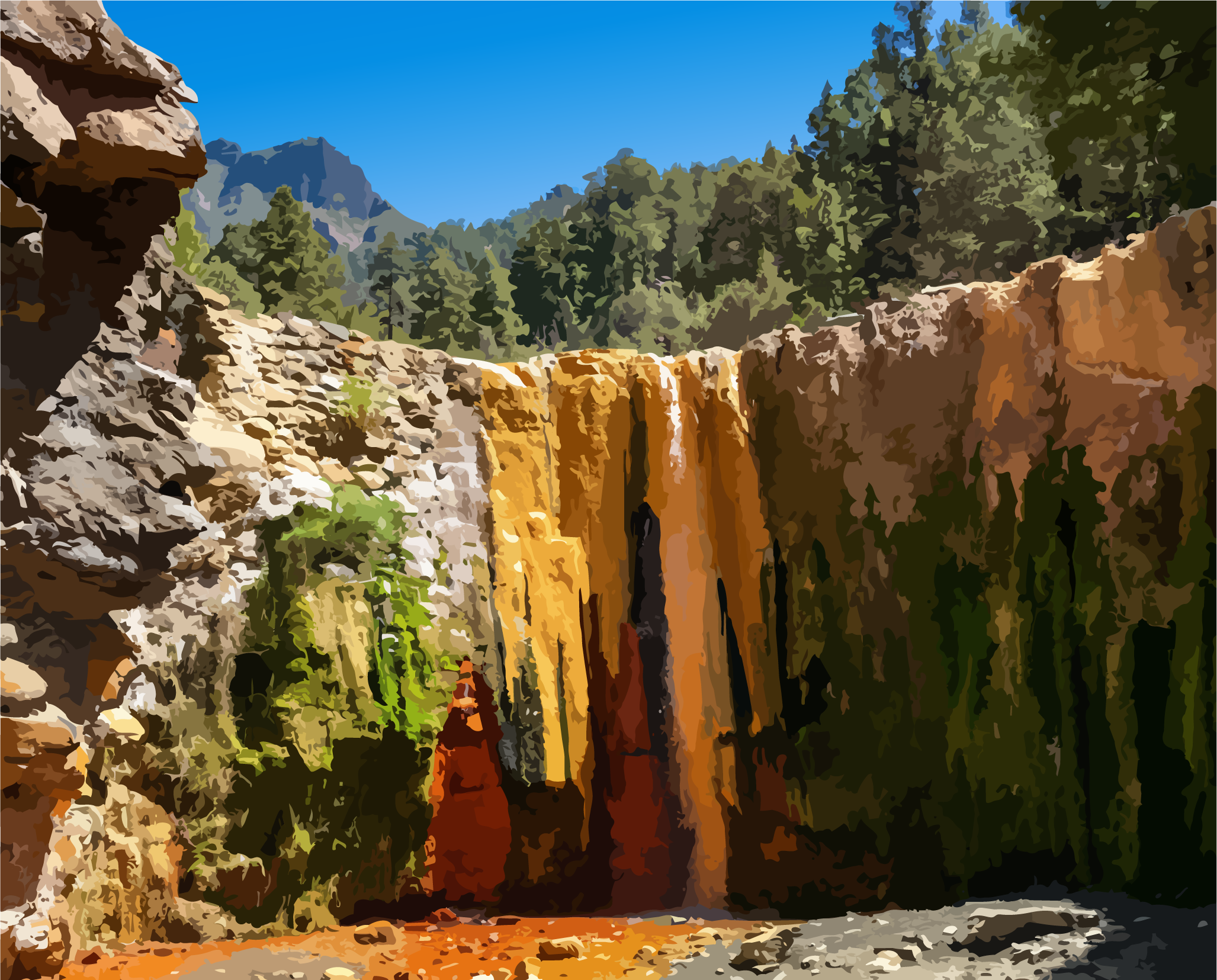
Water on La Palma is not distributed evenly. It does not follow a uniform pattern, but rather the invisible lines of wind, elevation, and terrain. The island exists in a constant interplay between the moist breath of the Atlantic and the drier rain-shadow slopes beyond the mountains. To understand how water moves across La Palma is, in many ways, to understand how life on the island begins, adapts, and endures.
"Adopt the pace of nature: her secret is patience."
Ralph Waldo Emerson
La Palma is not an island of uniformity. It is a mosaic of contrasts, compressed into a remarkably small area yet unfolding across an extraordinary diversity of climates, landscapes, and atmospheres. To travel across the island is not merely to cover distance, but to pass through entirely different worlds—from humid forests to arid volcanic terrain, from mist-covered slopes to sunlit Atlantic shores.
"Look deep into nature, and then you will understand everything better."
Albert Einstein
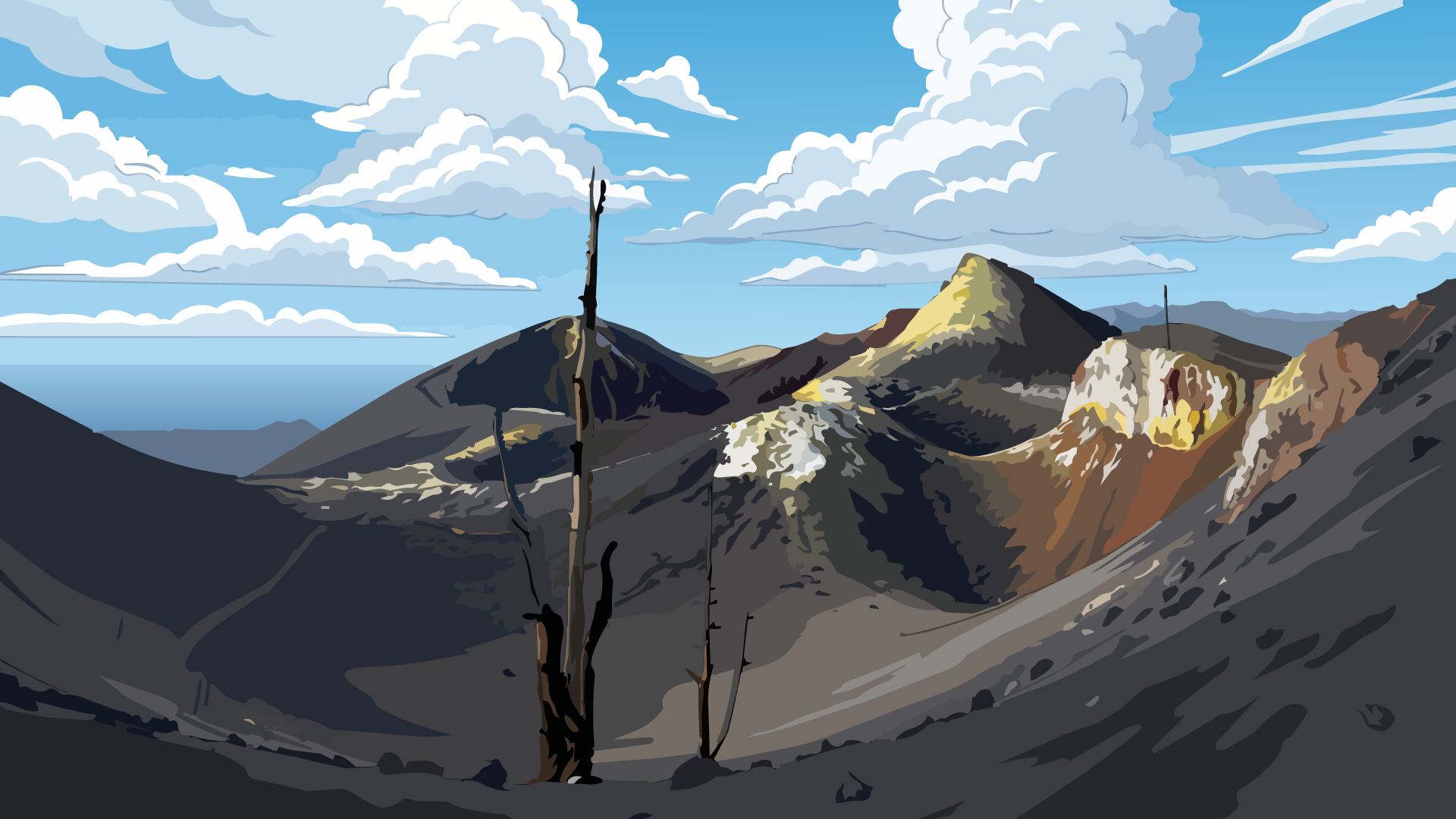
La Palma is an island born from the Earth's interior. Its foundation is not static, but the result of an ongoing process—a dynamic interplay of pressure, heat and time. Beneath its visible surface lies a history measured not in years, but in eruptions and geological cycles.
"Nature does not hurry, yet everything is accomplished."
Laozi
La Palma is an island where the volcano has shaped not only the landscape but also the way people think. Here, geological force is not an abstract phenomenon, but an experience that has become embedded in memory, storytelling and everyday life across generations. On this island, to live has always meant living with an awareness of change.
La Palma is an island where plants do not simply grow, but continually reorganize themselves across gradients of elevation, moisture and volcanic soils. Its vegetation is not a uniform carpet, but a complex mosaic of zones, transitions and adaptations. Every slope, every aspect and every altitude tells its own botanical story.
The wildlife of La Palma is quiet, unobtrusive and yet remarkably distinctive. Its richness is expressed not through spectacular numbers of large animals, but through finely tuned adaptations, endemism and ecological niches. On an island shaped by steep elevational gradients, diverse microclimates and long-standing isolation, a delicate yet resilient ecological balance has evolved.
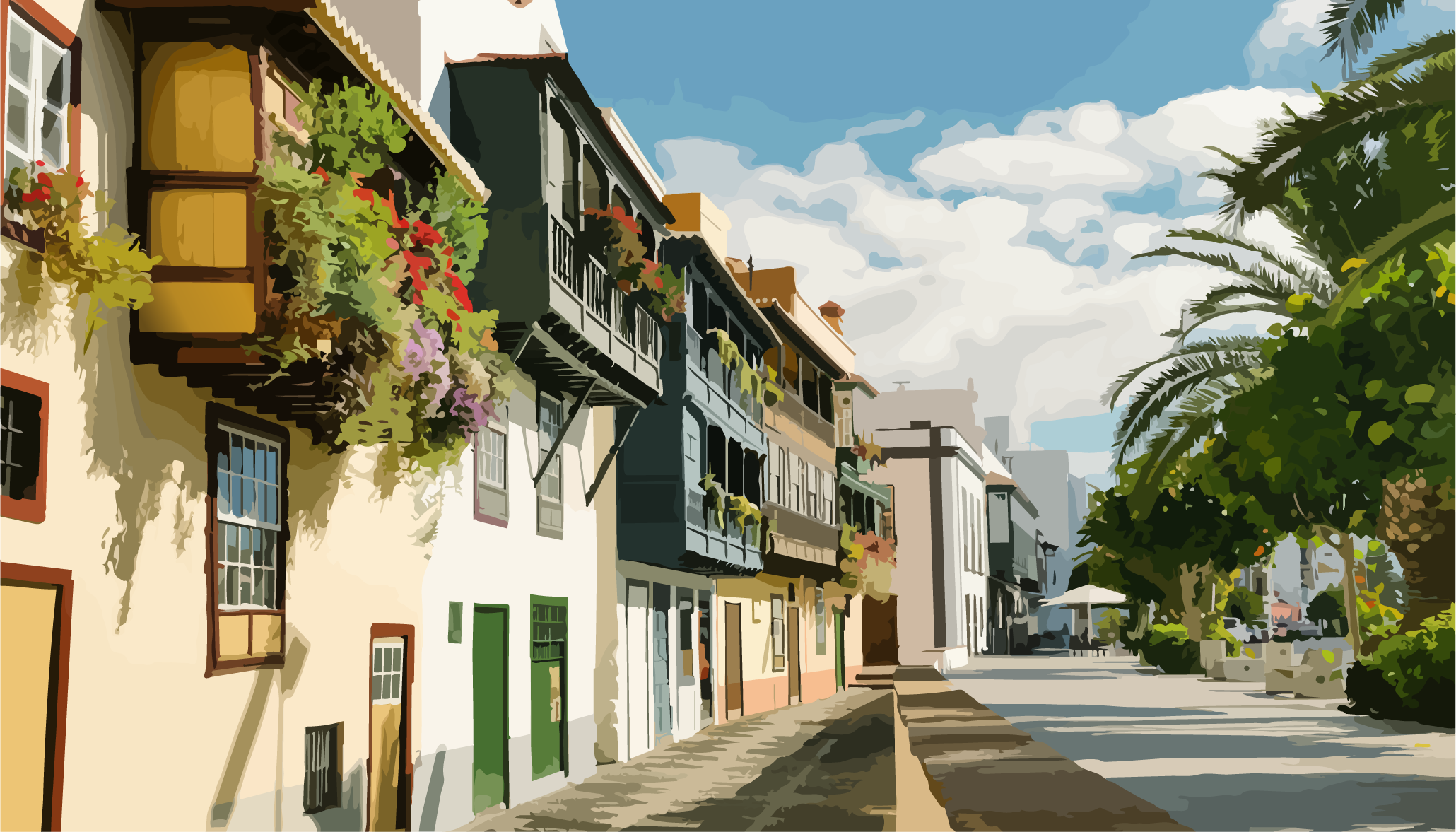
La Palma is an island where everyday life and landscape are inseparably intertwined. Agriculture here is not only an economic activity, but a direct response to topography, climate and water availability. Every terrace, every irrigation system and every field is part of a finely balanced equilibrium between natural conditions and human adaptation.
"The creation of a thousand forests is in one acorn."
Ralph Waldo Emerson
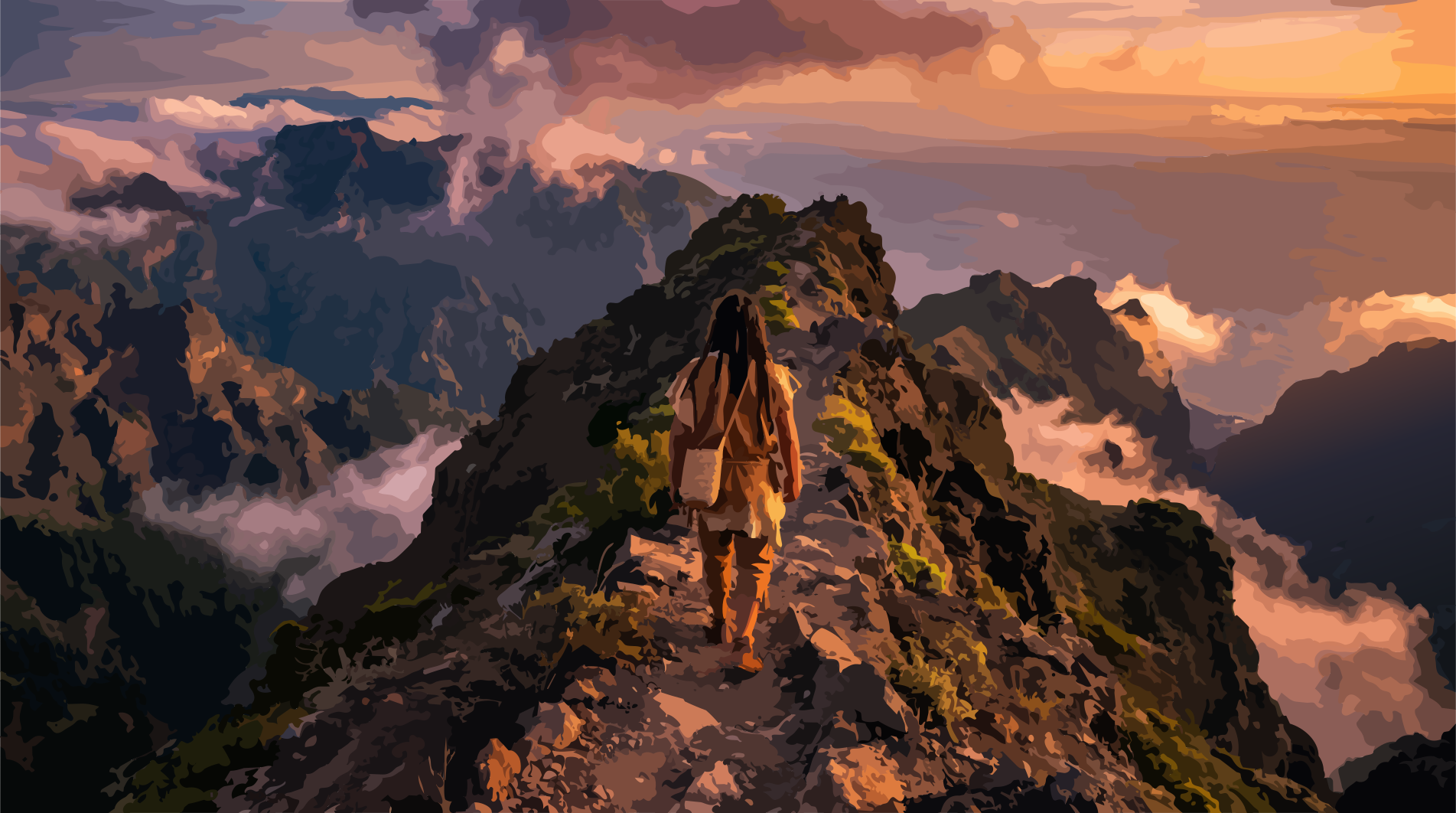
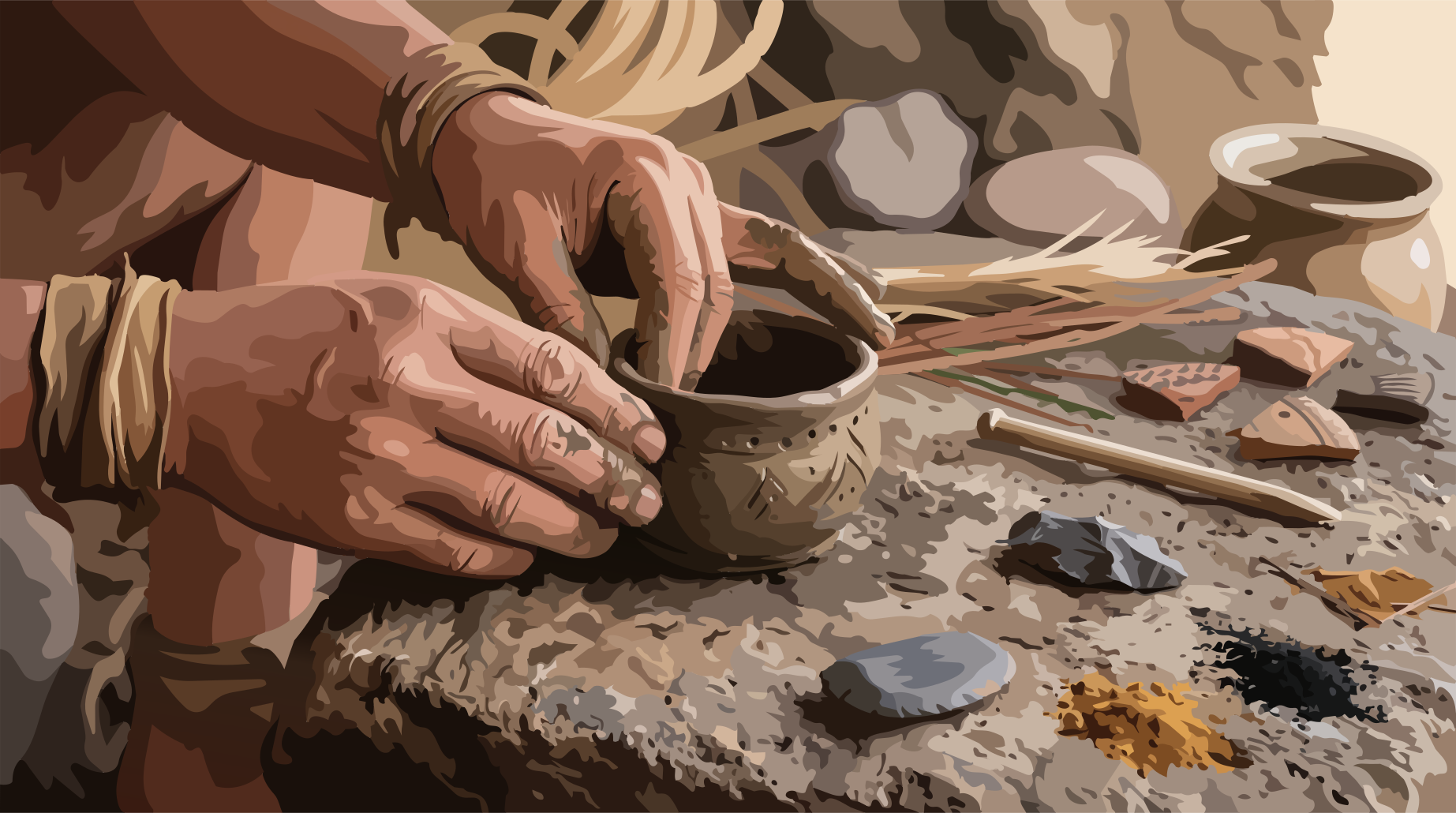
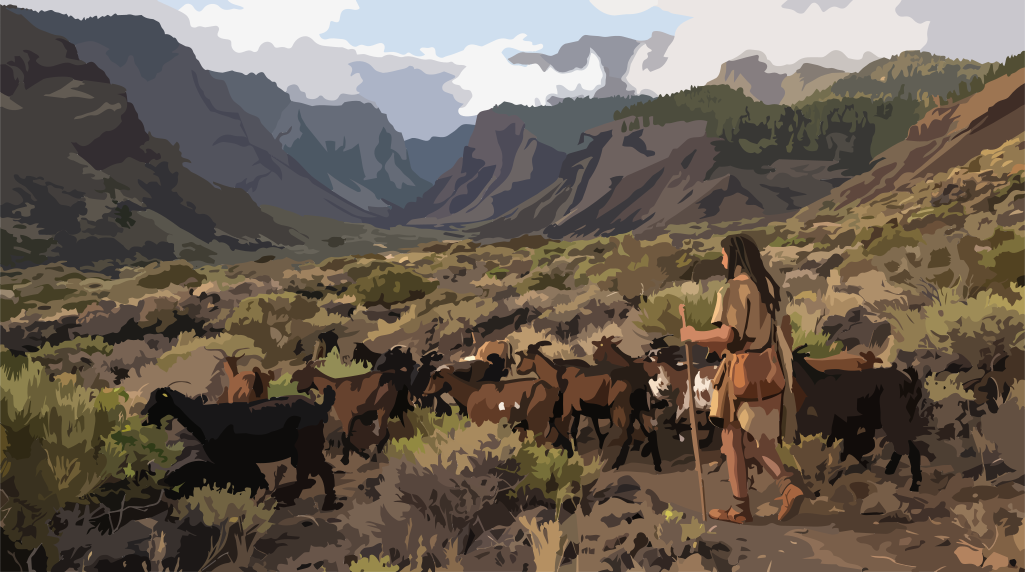
La Palma is an island whose history is not told through clear breaks, but through layers of arrival, adaptation and new beginnings. Long before colonial chronicles described it, it already existed as a space of volcano, forest and ocean—inhabited by the indigenous people of the Canary Islands, the Benahoaritas, whose traces still resonate today in caves, petroglyphs and ancient settlement sites.
Did you know? Insight cards for a deeper understanding
GEO 01
The youngest Canary Island
La Palma is geologically the youngest inhabited island of the Canaries, formed over roughly the last two million years.
GEO 02
Built from the ocean floor
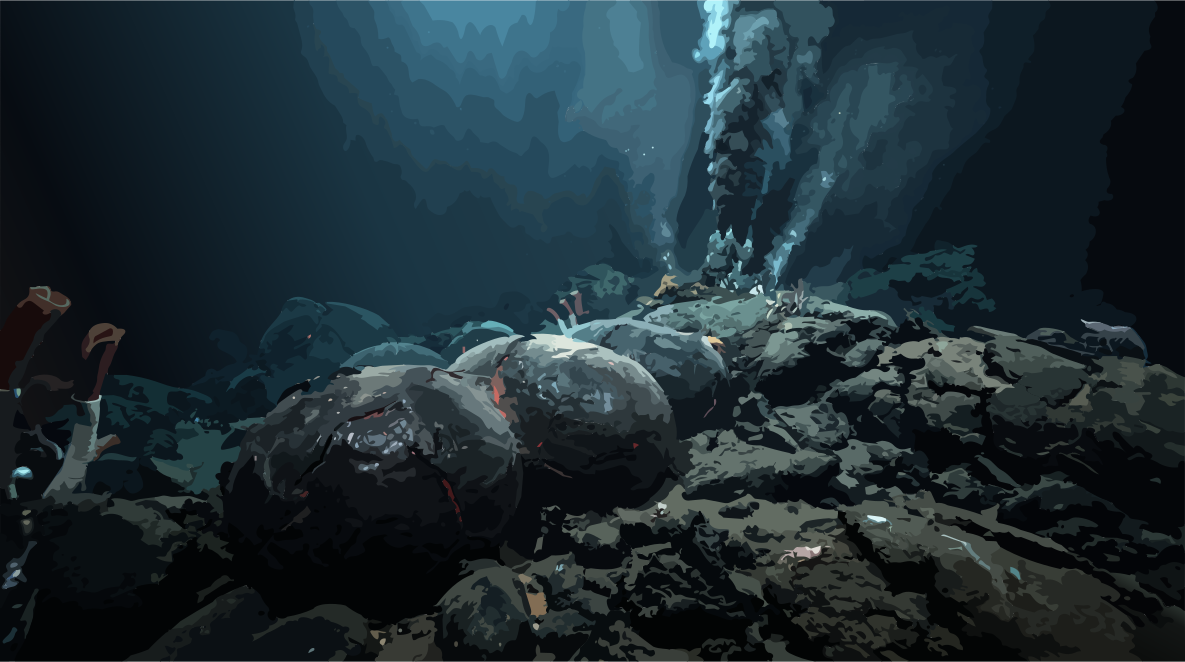
Before rising above sea level, countless eruptions stacked volcanic rock layer by layer on the Atlantic seabed.
GEO 03
Still growing today
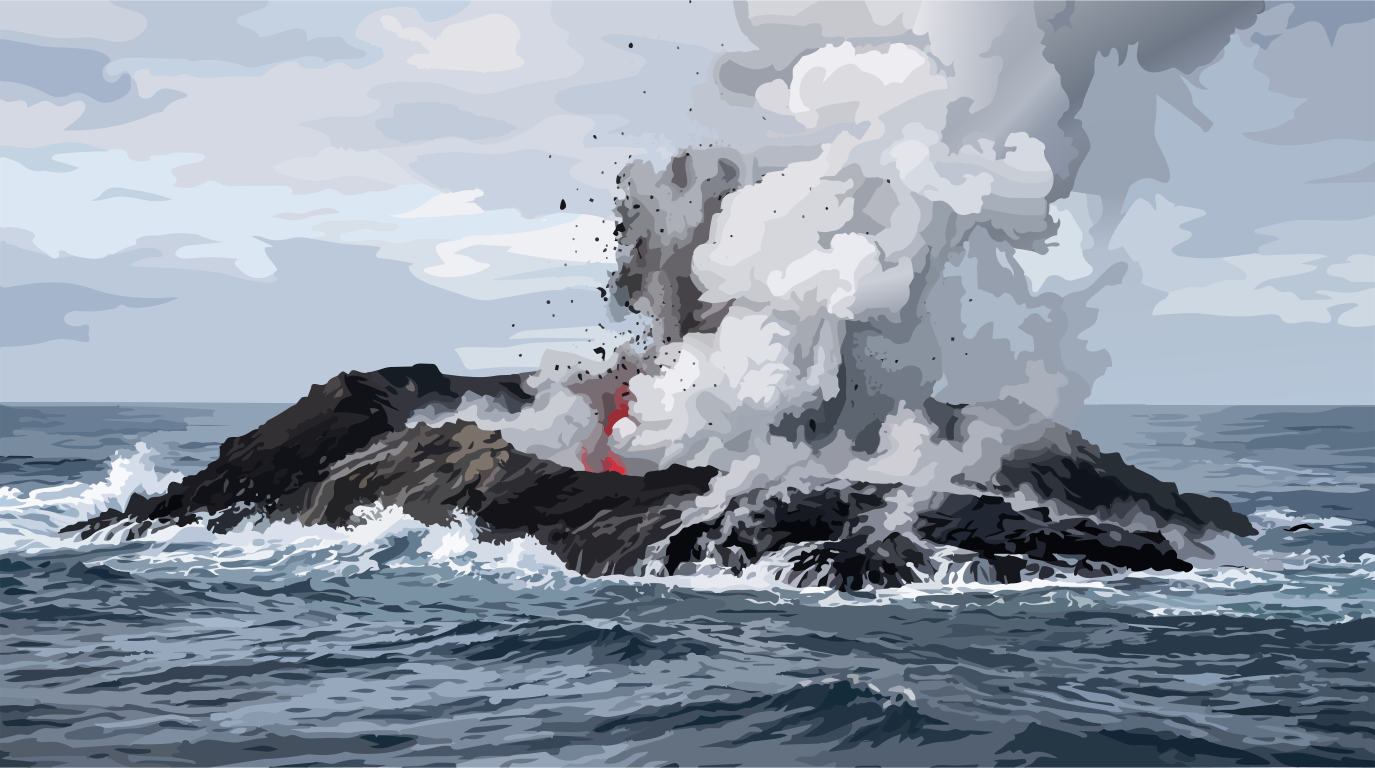
The 2021 Tajogaite eruption expanded the island and created new land at the Atlantic coast.
FLO 04
Fire can create life
Over time, weathered lava turns into mineral-rich soils that can support diverse and resilient plant communities.
GEO 05
One of Europe's youngest volcanoes
Tajogaite emerged in 2021 and is considered one of the youngest volcanoes in Europe.
GEO 06
Lava is rarely red for long
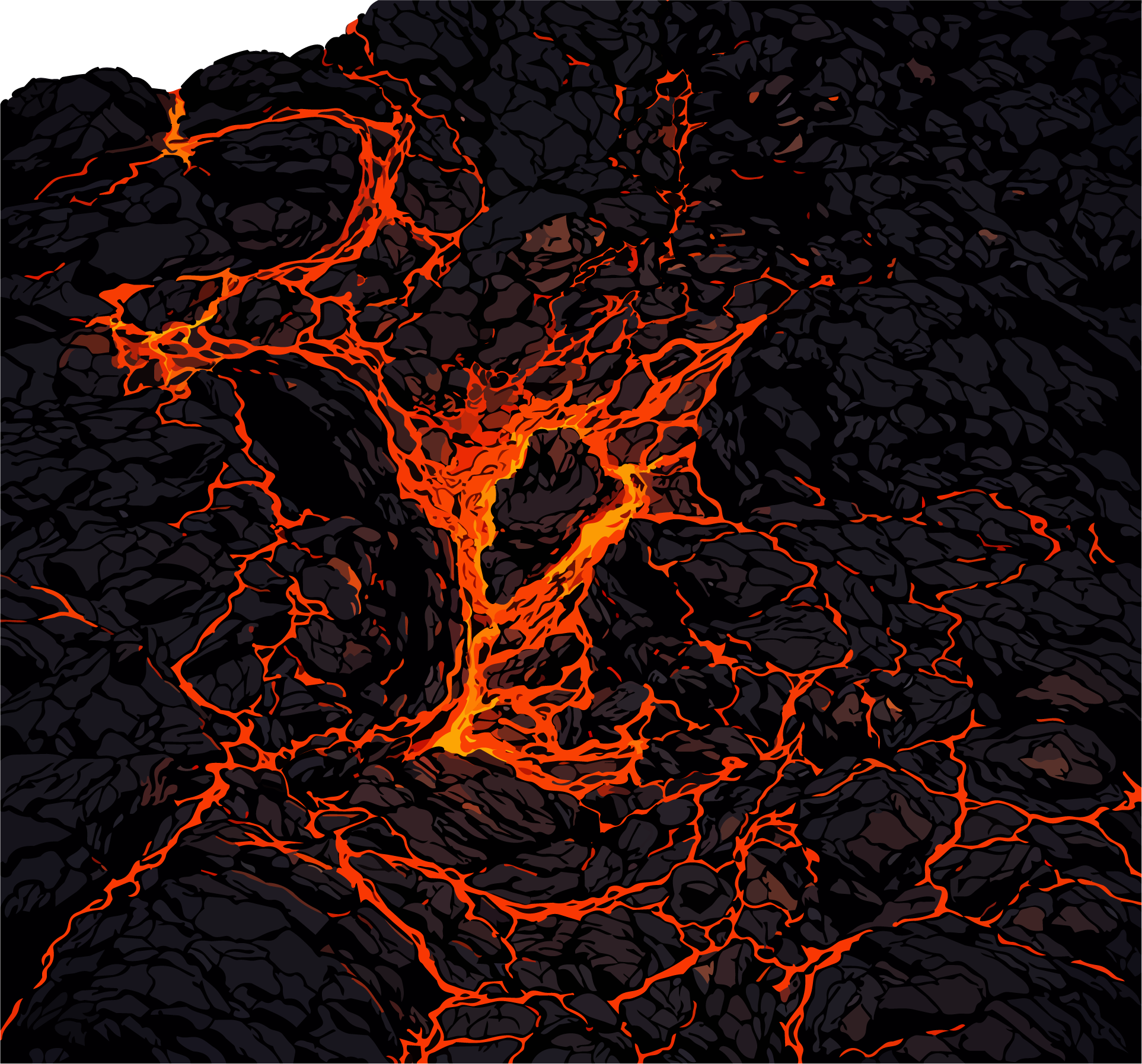
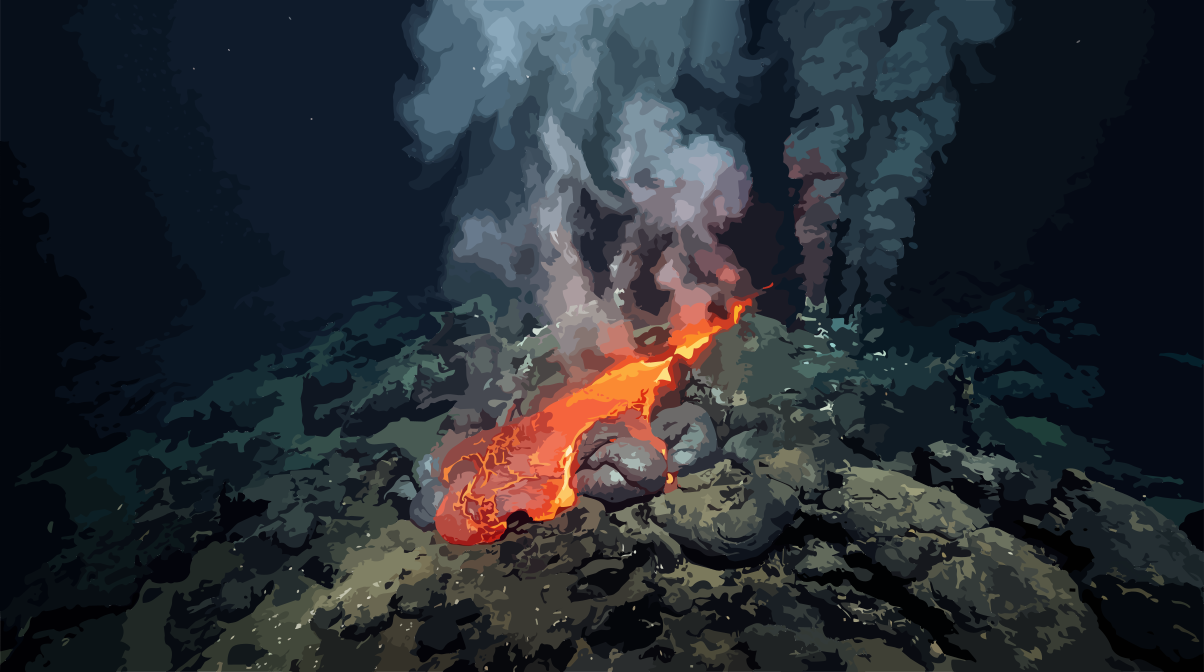
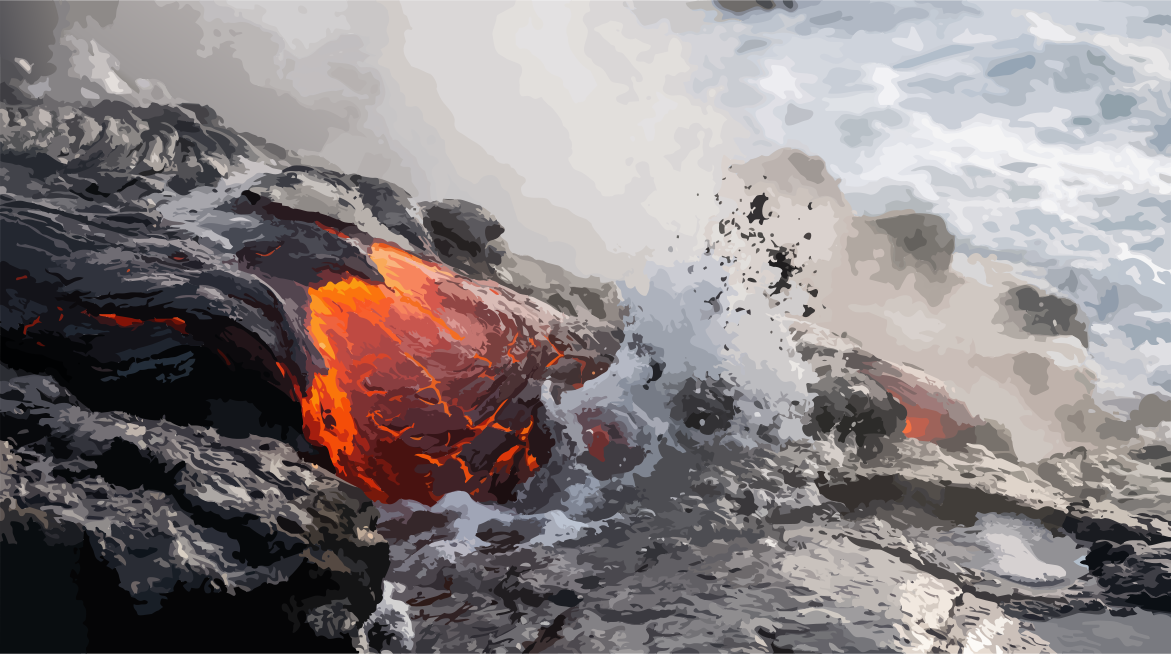
In photos lava often looks bright red, but its surface usually cools quickly and turns black.
CLI 07
Two climate zones on one island
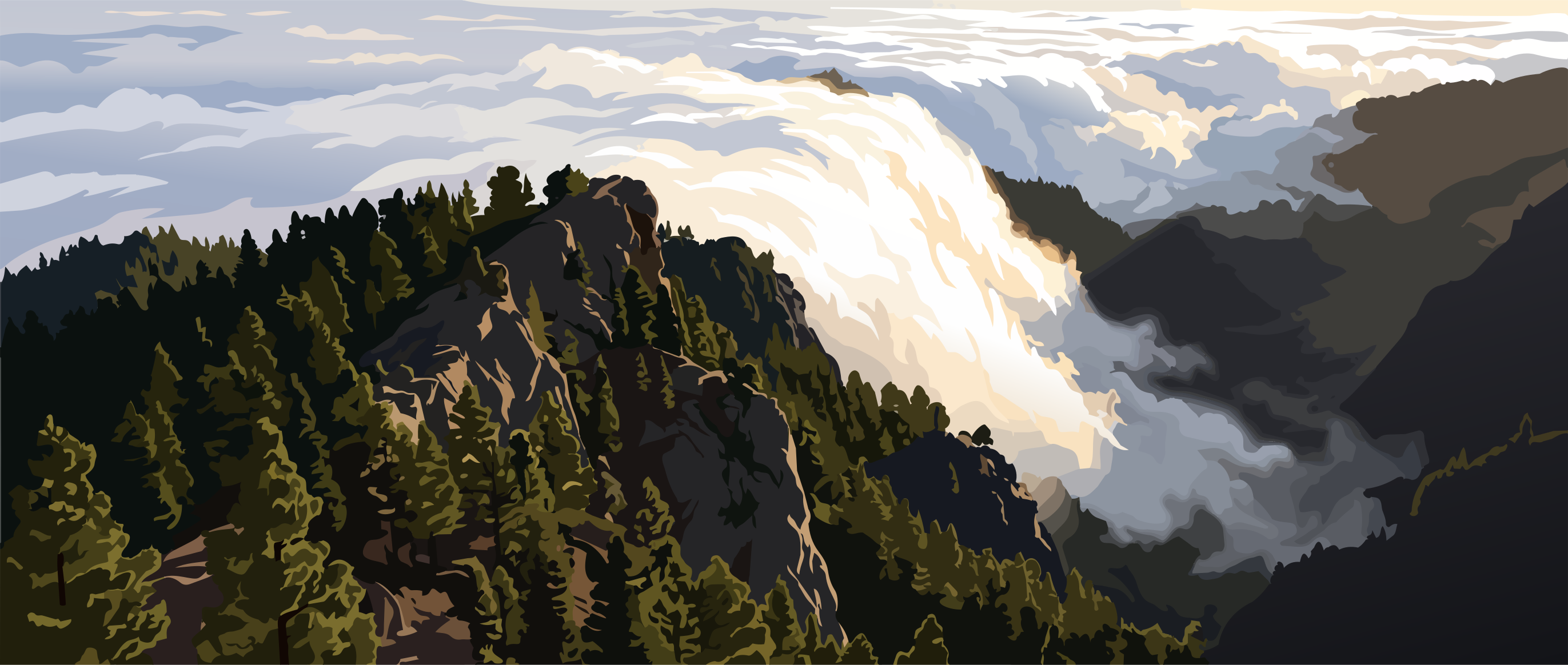
Cloud cover is common in the northeast while the west is often sunnier, driven by trade winds and mountain relief.
CLI 08
Clouds as a water source
Moisture does not come from rain only: fog condenses on plants and significantly supports forest water balance.
CLI 09
Water flows inside the mountain
A large share of freshwater comes from hundreds of kilometers of underground water galleries.
FLO 10
A forest from ancient times
Laurel forests on La Palma resemble ecosystems that covered large parts of Europe millions of years ago.
FLO 11
The pine that survives fire
The Canary pine has exceptionally thick bark and can often resprout after wildfires.
FLO 12
A tree that harvests clouds
Canary pine needles capture fog droplets that later drip to the ground and support local water cycles.
AGR 13
Wine grows on lava
In the south, vines grow on volcanic soils whose mineral profile contributes to the character of local wines.
AGR 14
Water can matter more than land size
On La Palma, access to water is often more decisive for land value than the size of a plot itself.
AST 15
A world-class night sky
Clean air, low light pollution, and protective regulations make La Palma one of the world’s top astronomy sites.
HIS 16
An island of many names
The indigenous name Benahoare predates the modern name La Palma, adopted after Castilian conquest.
Frequently asked questions about La Palma
Why is La Palma so green?
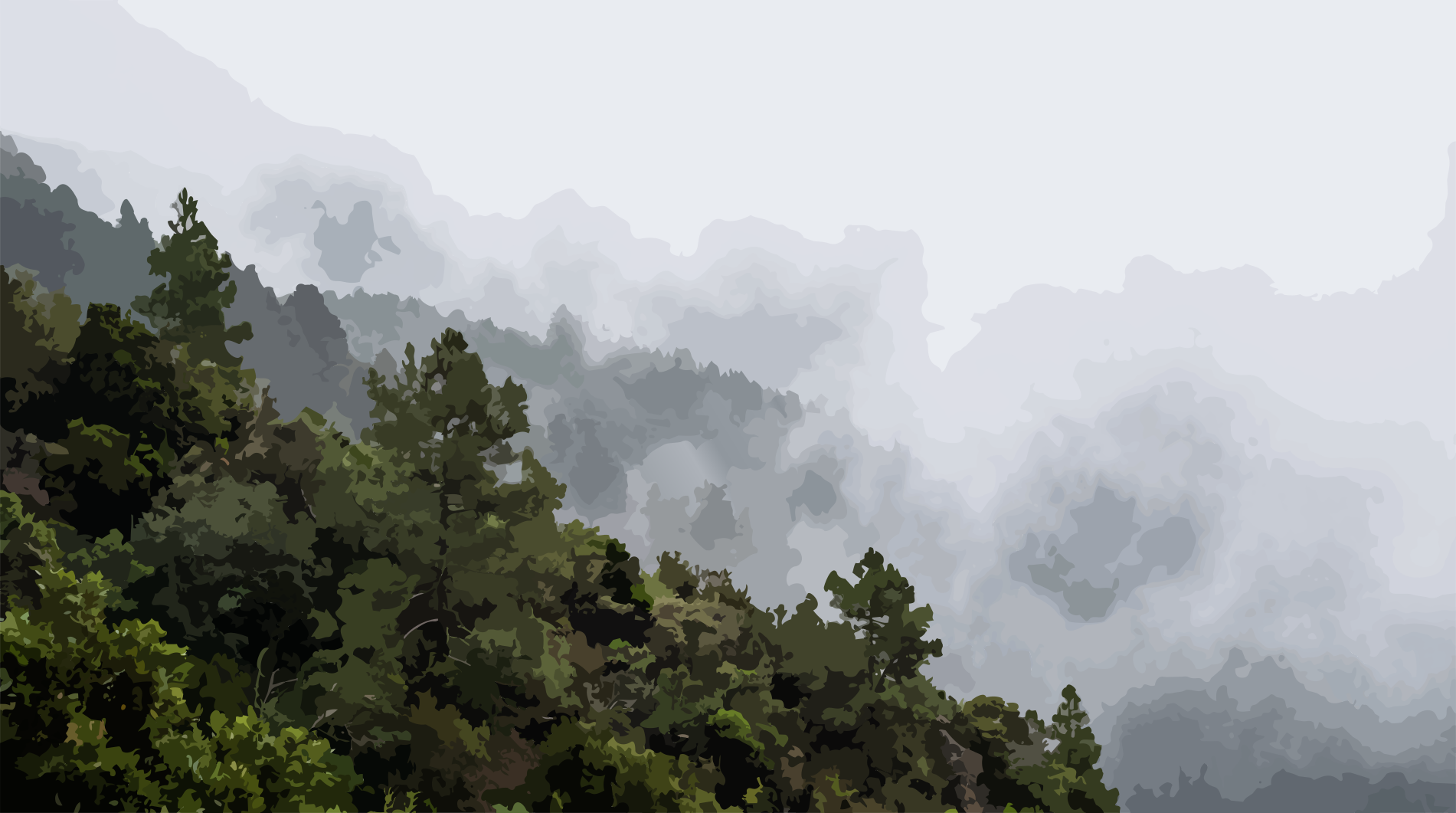
Trade winds carry humid Atlantic air toward the mountain slopes. Clouds form there and provide moisture, especially in the north, creating ideal conditions for dense forest ecosystems.
Why do so many plants grow on lava?
Fresh lava is initially harsh terrain. Over time, weathering turns it into mineral-rich soils that support diverse and resilient vegetation communities.
Is the volcano on La Palma still active?
Yes. La Palma is one of the geologically active Canary Islands. Eruptions are infrequent, but they are part of the island’s natural development.
Why are north and south so different?
Mountain relief influences wind and rainfall patterns. As a result, very different climate zones emerge over short distances.
Is climate change affecting La Palma?
Yes. Like many islands, La Palma is experiencing shifts in precipitation, temperature, and dry periods. Sustainable water management is becoming increasingly important.
Need professional support for your finca on La Palma?
From acquisition to ongoing care, we support you with local insight and practical technical planning.